Ina Garten-Inspired Bolognese
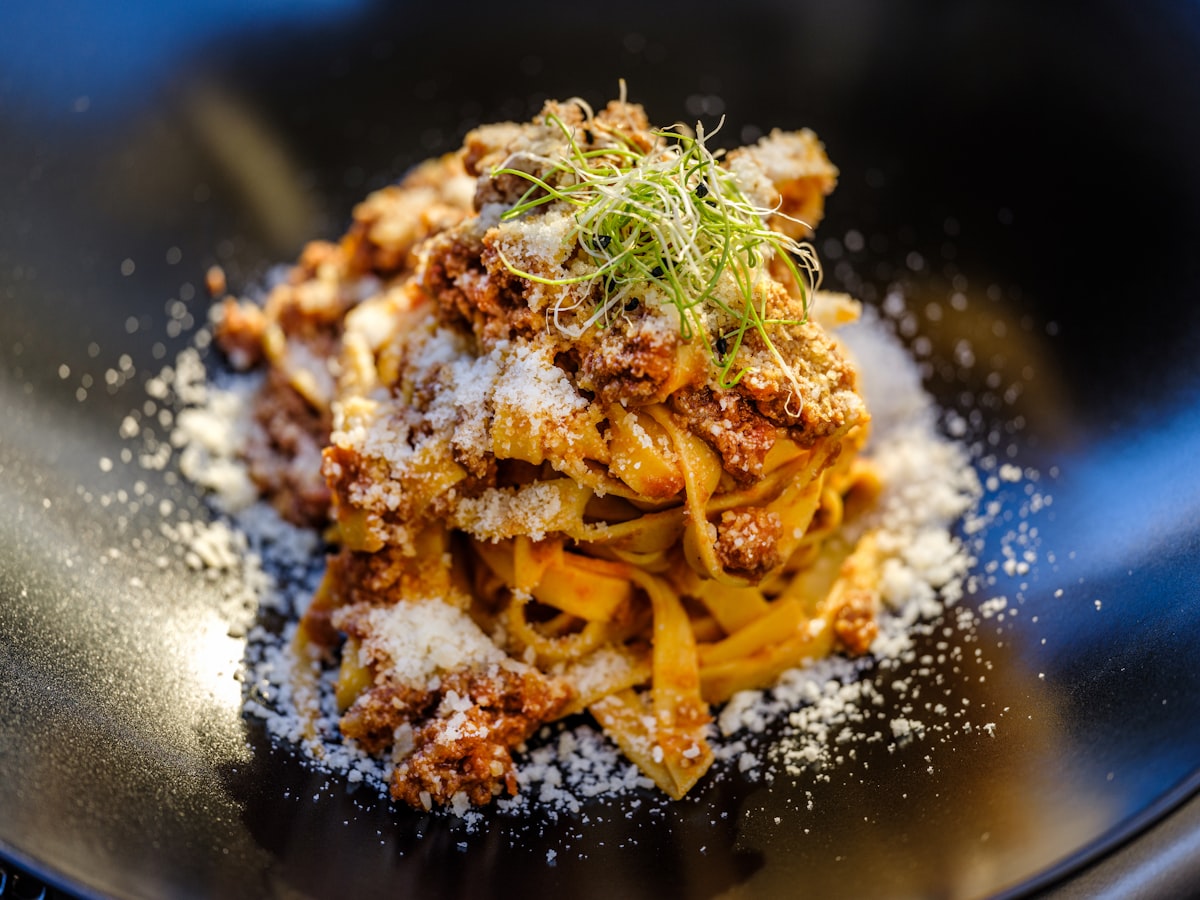
There is a step in the traditional recipe that looks like a mistake, and it is the one almost every shortened version leaves out.
Milk goes into the meat before the tomatoes, and simmers until it has been completely absorbed. Its calcium and its mild acidity work on the meat proteins and leave the mince noticeably softer, and its sweetness takes the hard edge off the tomato that comes later. It also emulsifies with the rendered fat, which is part of why a real ragù coats pasta rather than sitting on it in a heap.
It will look curdled and wrong for a few minutes. Keep going; it disappears.
Jump to the recipe ↓Ina Garten-Inspired Bolognese
Serves 6 · Main
- Prep
- 20 min
- Cook
- 2 hr 30 min
- Total
- 2 hr 50 min
Involved8 steps, 11 ingredients, a technique that commonly fails, over two hours
Ingredients
- 500 g minced beef, 15–20% fat
- 300 g minced pork
- 150 g pancetta, finely diced
- 2 tbsp olive oil, 30 g butter
- 1 onion, 1 carrot, 2 celery sticks, all finely diced
- 250 ml whole milk
- 200 ml dry white wine
- 3 tbsp tomato purée
- 1 x 400 g tin chopped tomatoes
- 300 ml beef stock
- 2 tsp kosher salt, black pepper, pinch of nutmeg
Method
- Render the pancetta in the oil and butter.
- Add the soffritto and cook over medium-low, until sweet and soft.15 minutes
- Brown the beef and pork hard, breaking them up, until the liquid has gone and the meat is properly coloured.
- Pour in the milk and simmer until it has completely disappeared — about. It will look split. It will come back.15 minutes
- Add the wine and simmer until absorbed.
- Stir in the tomato purée, cook , then add the tomatoes and stock.2 minutes
- Simmer very gently, uncovered , until thick and glossy and the fat has separated at the edges.2 hours
- Season, and add nutmeg.
Very little tomato
A Bolognese is a meat sauce, not a tomato sauce with meat in it. One tin, or a few tablespoons of purée and a little passata, across a kilo of meat. The colour should be brown with a reddish cast, not red. Most recipes outside Italy use three or four times as much tomato and end up somewhere else entirely.
Chop the soffritto finely and cook it slowly
Onion, carrot and celery, diced small and given fifteen minutes in fat over medium-low, are the flavour floor of the whole pot. Rushed, they stay crunchy and raw-tasting through two hours of simmering — vegetables that have not sweetened do not sweeten later.
Serve it with tagliatelle, not spaghetti
A thick meat sauce needs a broad, rough, porous noodle to hold onto. Spaghetti is smooth and round and the sauce slides off it into the bottom of the bowl. This is a practical point rather than a purist one — tagliatelle, pappardelle or rigatoni all work for the same reason.
Storing
Four days refrigerated, three months frozen, and it is genuinely better on day two. Freeze it in portions; it reheats without any loss.
Questions people ask
Why put milk in a Bolognese?
It tenderises the meat and rounds off the acidity of the tomato. It is in the traditional recipe.
Why so little tomato?
It is a meat sauce. Too much tomato makes it a different dish.
How long does it need?
Two hours at a bare simmer. There is no shortcut that produces the same texture.
White wine or red?
White is traditional in Bologna. Red works and gives a heavier result.
More like this
 Ina Garten-Inspired Beef Bourguignon: Garnish ApartThe onions and mushrooms are cooked separately and added at the end. Simmered in from the start they are what turns it into ordinary stew.
 Ina Garten-Inspired Beef Stroganoff: Not Stewing SteakStroganoff is a fast dish and stewing beef needs hours. Use fillet or sirloin, seared in seconds, or it turns grey and tough.
 Ina Garten-Inspired Beef Tenderloin: Tuck the TailA whole tenderloin tapers from thick to thin. Fold the narrow end under and tie it, or that end is well done before the middle is warm.